
When travelers talk about airfare “sticker shock,” they’re usually thinking about base fare and maybe bags. But international tickets often include government and airport charges—departure taxes, passenger service charges, and security fees—that vary by country and can be confusing even for experienced travelers.
Here’s the important part: some of these charges have exemptions (often based on age, transit status, or special categories) and in limited cases there may be refund pathways—but eligibility is strict and documentation matters.
Quick Facts for Travelers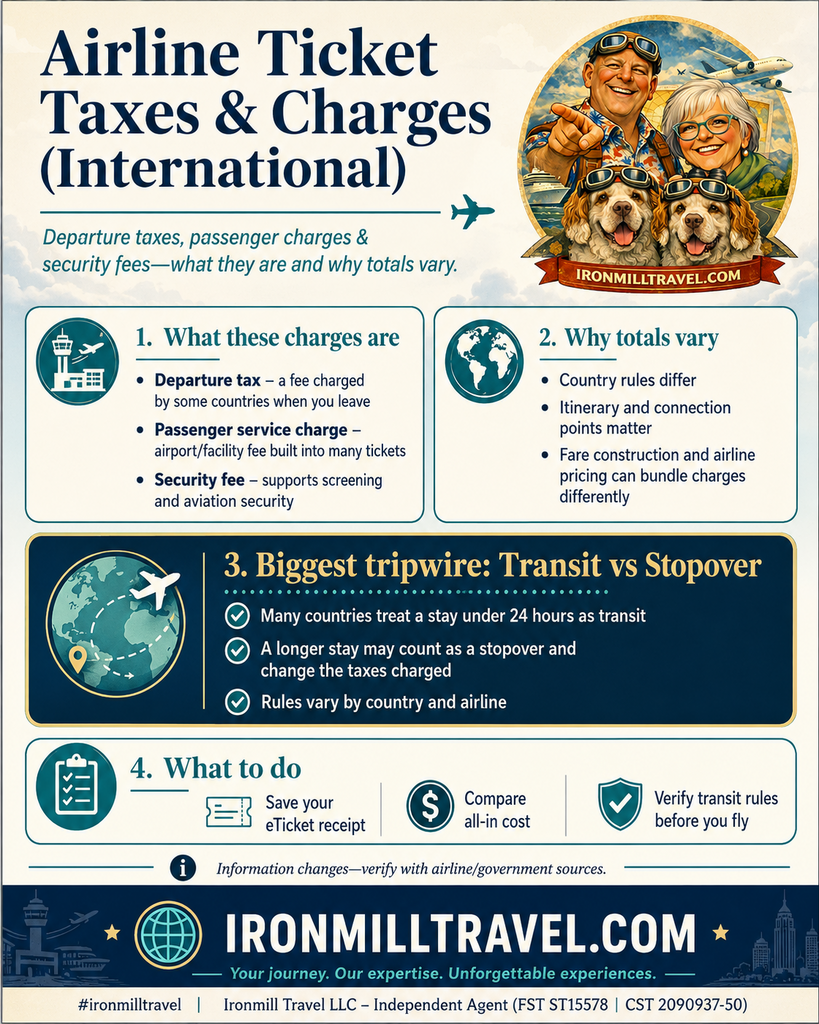
- What it is: Government/airport charges included in airline tickets (departure taxes, passenger charges, security fees) that can vary by country and sometimes have exemptions.
- Who it’s best for: Anyone flying internationally—especially families, travelers connecting through hubs, and travelers who want “all-in” price clarity.
- Where: Worldwide; rules differ by country and sometimes by itinerary type (transit vs. stopover).
- When: Review at booking, then re-check before departure if your itinerary changes.
- Key highlights: Common exemption triggers: infants/children, certain transit scenarios, and specific status categories (varies by country).
- Why it matters: These charges can materially impact total trip cost, and exemptions can be missed if you don’t understand the rules.
- Planning tip: Save your e-ticket/receipt and watch for itinerary changes (a reissue can change tax line items).
- How to book: If you want help reviewing the “tax lines” on an international ticket, Ironmill Travel can help you understand what you’re seeing and what questions to ask the airline.
Three real-world examples travelers ask about
1) United Kingdom: Air Passenger Duty (APD)
The UK’s official APD guidance includes exemptions for certain travelers, including children under 2 without a seat (and specific conditions if a seat is purchased), and other child exemptions depending on age and class of travel.
Traveler takeaway: if you’re flying with an infant or child, exemptions may depend on whether you purchased a seat and what cabin/class you’re in—details matter.
2) Japan: International Tourist Tax (departure tax)
Japan’s official tax guidance for its departure tax includes “untaxable” categories such as children under age 2 and certain transit passengers leaving within 24 hours, among other conditions.
(Note: Japan’s tourist tax is a national departure tax; whether you “see” it as a separate line item can depend on how it’s collected by the carrier.)
3) Mexico / Belize / Colombia / Trinidad & Tobago: airline-published exemption/refund guidance
Some airlines publish country-specific tax exemption/refund guidance covering specific codes and scenarios (e.g., Mexico and Colombia transit rules, Belize age/residency categories, Trinidad & Tobago passenger charges) and note a 12-month claim window for certain refund claims.
This is not universal across all airlines, but it’s a helpful example of how strict and itinerary-dependent these rules can be.
The #1 tripwire: transit vs. stopover
Across multiple tax systems, “transit” is treated differently than “entering the country.”
If you’re connecting internationally within a tight window, you may fall into an exemption category; if you stop over (especially beyond 24 hours), you usually don’t. That’s why your connection timing and your ticketed itinerary matter.
What travelers should do (simple, practical steps)
- Keep your receipt/e-ticket (tax lines are often easiest to review there).
- If traveling with children, confirm whether any age-based exemptions apply at your destination/transit points.
- If you have a tight international connection, confirm whether you’re considered a transit passenger or if your itinerary counts as a stopover.
- If you believe you qualify for an exemption or refund, verify directly with the operating airline and the relevant government authority before you travel.
Disclaimer
This post is for general educational purposes and is presumed accurate based on official sources cited at the time of publication. Tax rules, exemptions, documentation requirements, and refund procedures can change without notice and may vary by airline, itinerary, and traveler circumstances. Travelers should verify requirements directly with the operating airline and the relevant government authority before travel. Ironmill Travel LLC does not provide legal or tax advice.
#ironmilltravel #InternationalTravel #TravelTips #TravelPlanning
Ironmill Travel LLC – Independent Agent (FST ST15578 | CST 2090937-50)