
Not all “tourism fees” are part of your airline ticket. Many destinations charge a visitor levy, tourist card fee, or entry charge that’s collected either:
- during a visa/ETA application,
- at arrival, or
- automatically through airfare (varies by destination).
Here are three high-impact, common examples—verified against official sources—so travelers can plan without surprises.
Quick Facts for Travelers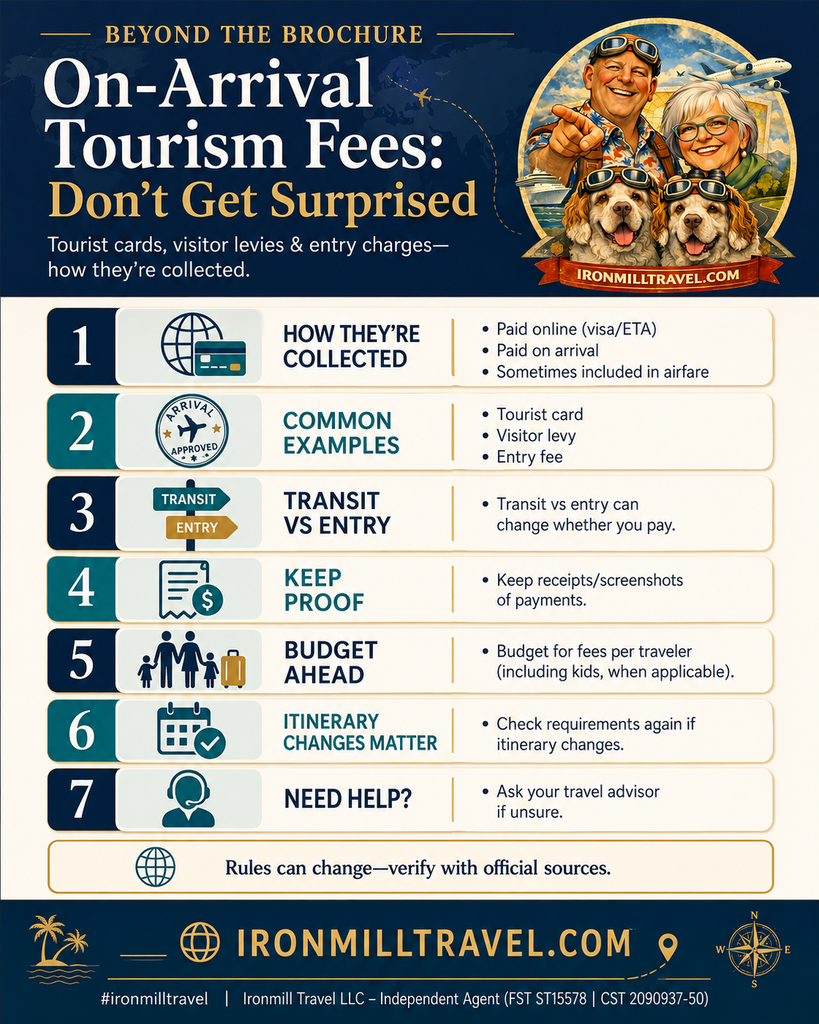
- What it is: On-arrival or travel-authorization tourism fees (tourist cards, visitor levies, entry fees).
- Who it’s best for: Anyone traveling internationally—especially families and budget travelers who want accurate “all-in” trip costs.
- Where: Varies by country; collection method varies (airfare vs. online authorization vs. arrival).
- When: Budget for it at planning time; pay/complete requirements before you fly when possible.
- Key highlights: Fees may be bundled into airfare (sometimes), but many are collected during travel authorization.
- Why it matters: These charges can be missed in budget planning—and rules can vary by transit vs. entry.
- Planning tip: Always confirm whether your fee is paid via airfare, online authorization, or on arrival.
- How to book: Ironmill Travel can help you build a destination-specific “entry cost” checklist so you don’t get surprised.
1) New Zealand: International Visitor Conservation and Tourism Levy (IVL)
New Zealand requires many visitors to pay an IVL as part of their visa or NZeTA process, and official guidance also lists categories that do not need to pay (including New Zealand citizens/residents, certain transit travelers, Australian citizens/permanent residents, and others).
Traveler takeaway: this is a classic example of a fee collected during the travel-authorization process—not something you want to discover late.
2) Dominican Republic: tourist card / departure tax handling
The Dominican Republic’s official tourism FAQ notes the departure tax is included in airline ticket fare.
In addition, airline guidance (JetBlue) explains the Dominican Republic tourist card fee and notes it is not applicable to transit/transfer travelers in certain circumstances.
Traveler takeaway: some destinations bundle fees into airfare, but transit rules can still matter.
3) Europe: ETIAS (planned) — fee exemptions
ETIAS is not yet operating, but the EU’s official “Travel to Europe” site states that applicants under 18 or over 70 are exempt from the application fee, among other exemption categories.
Traveler takeaway: many “on-arrival” style charges are shifting to online pre-authorizations with defined exemptions.
What travelers should do (simple checklist)
- Identify whether your destination requires a tourist card, visitor levy, or travel authorization.
- Confirm how it’s paid (airfare vs. online authorization vs. arrival).
- Confirm exemptions that might apply (age, residency, transit).
- Keep a screenshot/receipt of payment confirmation if paid online.
Disclaimer
This post is for general educational purposes and is presumed accurate based on official sources cited at the time of publication. Entry fees, levies, and authorization requirements can change without notice and may vary by nationality, itinerary, and transit circumstances. Travelers must verify requirements directly with the destination’s official government sources and/or their airline before travel. Ironmill Travel LLC does not provide legal advice.
#ironmilltravel #InternationalTravel #TravelTips #TravelPlanning
Ironmill Travel LLC – Independent Agent (FST ST15578 | CST 2090937-50)